A neutral interior becomes memorable when it gives the eye more than color to read. The quietest rooms are often built from surfaces that change with light, distance and touch.
The problem with a palette described only as beige, cream or greige is that it treats every surface as a flat swatch. In a real room, a woven curtain, honed limestone and hand-applied plaster can share almost the same hue while creating completely different experiences. One filters light. One absorbs it. One records the subtle movement of the maker’s hand.
Begin with reflectance
UAE daylight is powerful. A glossy surface can feel energetic at noon and harsh by late afternoon; a very matte surface may appear beautifully calm but lose definition in low light. Before selecting a finish, place a large sample in the actual room and observe it in morning, midday and evening conditions.
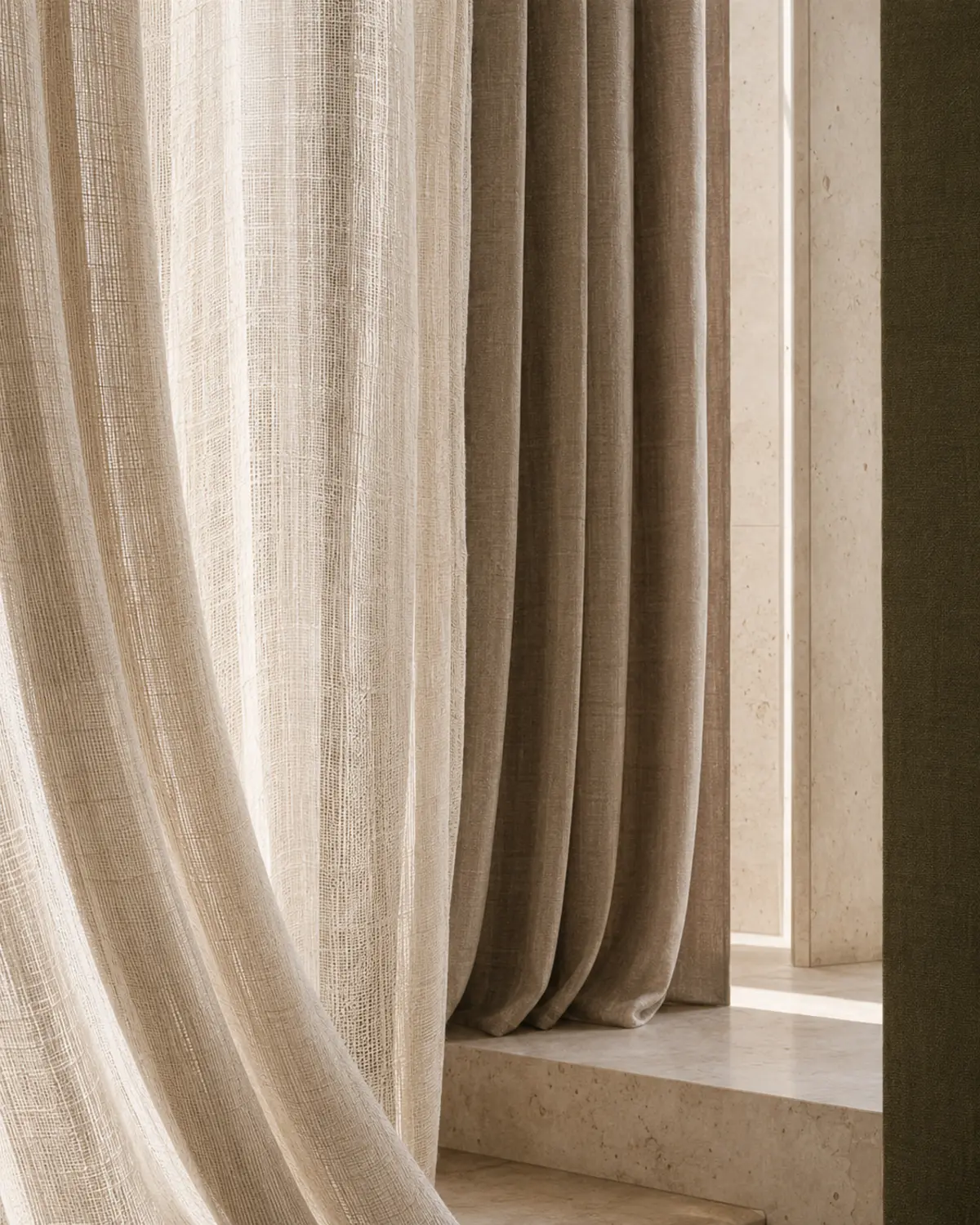
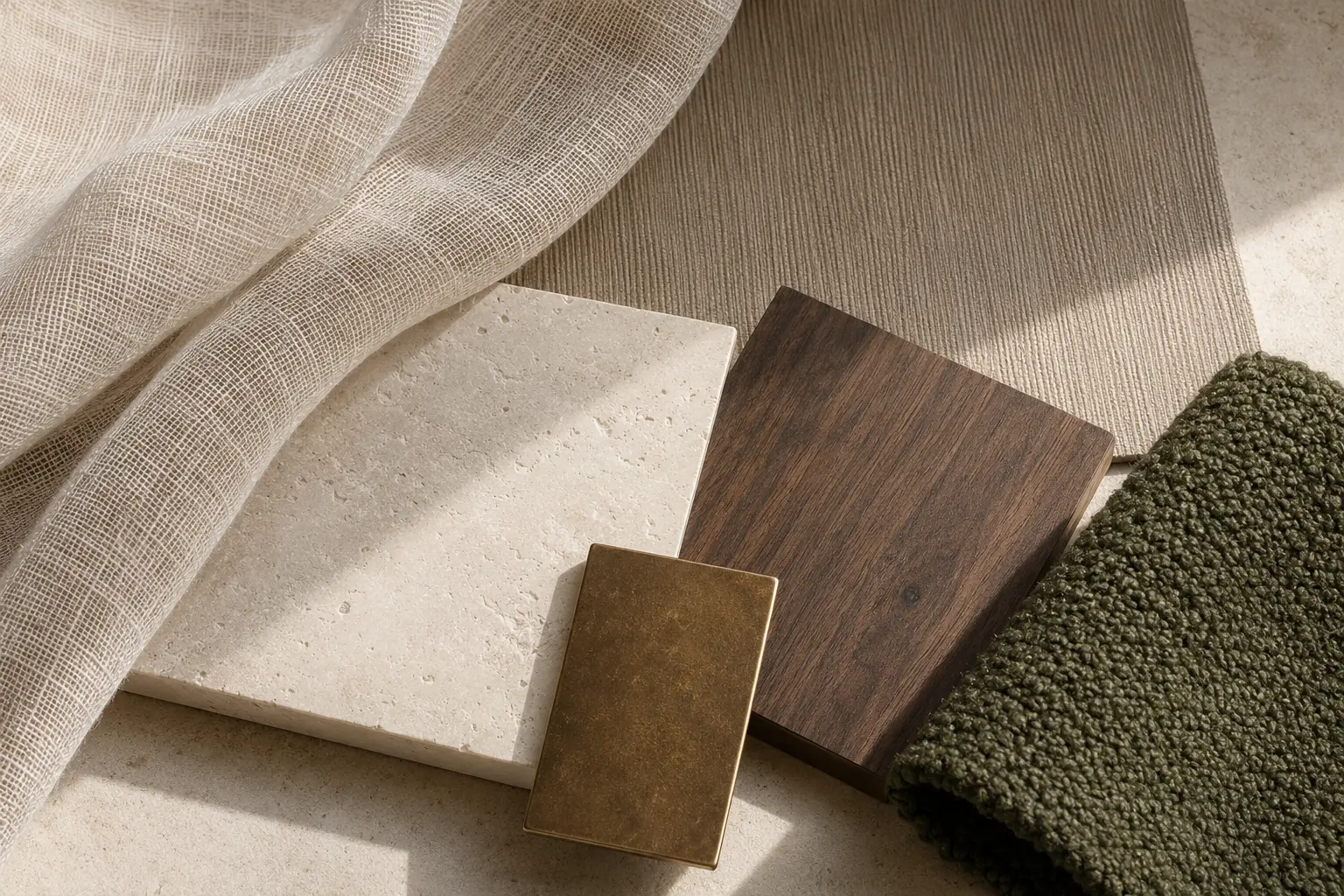
Use reflectance deliberately. Sheer linen diffuses glare at the window. Honed stone creates a soft architectural base. A small bronze element catches light and punctuates the scheme. Contrast does not need to come from color alone.
If every finish asks for attention, the room has nowhere to rest.
Build a hierarchy of texture
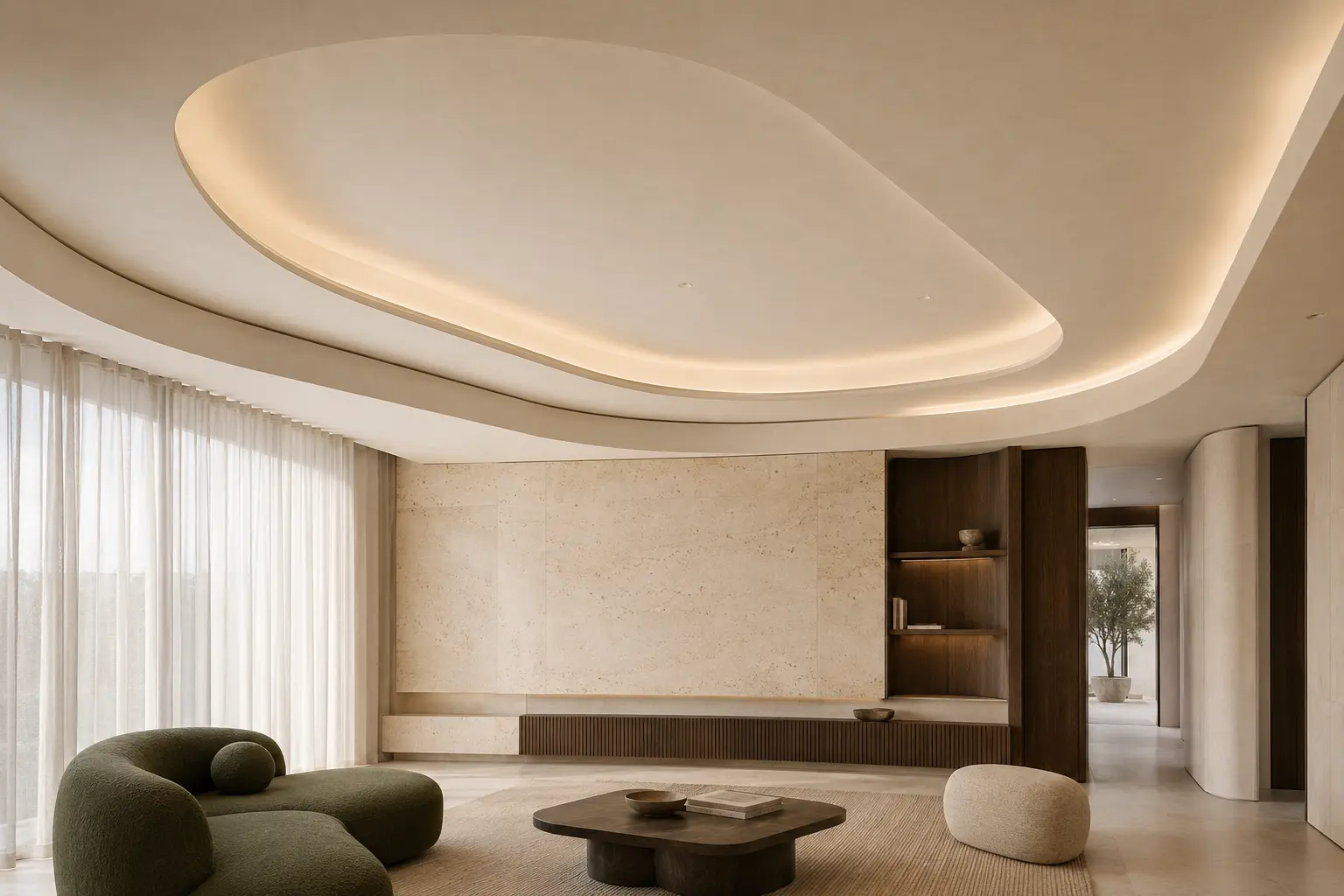
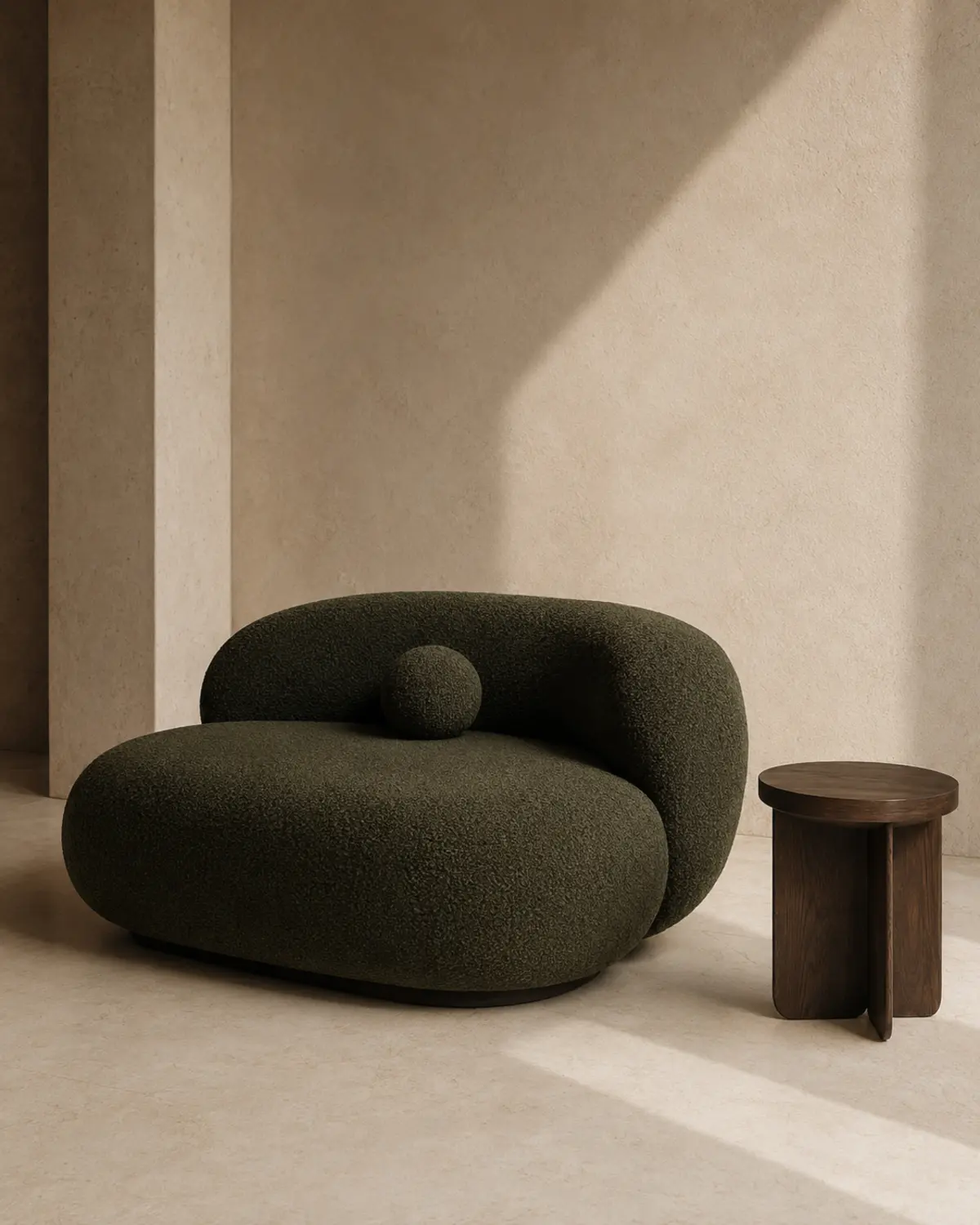
Choose one dominant texture, one supporting texture and a restrained accent. In a living room, a mineral wall may establish the atmosphere, linen curtains soften the architecture and bouclé appears only on a single chair. Repeating every texture at the same intensity creates noise, even when the colors match.
Natural variation is valuable because it prevents a large neutral surface from feeling synthetic. It should, however, remain within a controlled range. Review enough pieces or a sufficiently large sample to understand the real variation before approval.
Test the whole composition
A successful material palette is not a tray of beautiful samples. It is a relationship between scale, placement, light and use. Put curtain fabric vertically against the window, not flat on a table. View wallpaper at wall height. Place upholstery beside the timber and flooring it will meet. The room is the final sample board.